Lead in jewelry.

Costume jewelry is one of the most lead-contaminated categories in American homes — routinely tested at 50% or more lead by weight. The bracelet on your wrist could be half lead, and you would never know by looking at it.

The least-tested, highest-concentration source.

Lead shows up in costume jewelry for three reasons. It is cheap. It is heavy — so a flimsy alloy can be made to feel substantial in the hand. And it is a soft, plate-friendly base metal that takes a thin gold or silver finish well. Solder on chain links is another common source.

The U.S. Consumer Product Safety Commission caps lead in children’s jewelry at 100 ppm. Adult costume jewelry has no federal lead limit at all. Kids put adult jewelry in their mouths anyway — mom’s necklace, a hand-me-down bracelet, the bead off a charm — and a single swallowed bead has been enough to cause acute lead poisoning in documented cases.

Where lead jewelry comes from.

CPSC recall lists are dominated by the same handful of categories year after year — Claire’s, Justice, dollar-store racks, mall kiosks. If you have any of the following in the house, assume lead until you have tested:

  • Imported costume jewelry, especially from China, India, and Mexico
  • Metal beads on bracelets and necklaces — the bead itself is often a pure lead alloy
  • Charms on charm bracelets, zipper pulls, and keychain trinkets
  • Vintage costume pieces from the 1960s through 1990s
  • Novelty, festival, and Halloween jewelry — the cheaper the run, the higher the risk
  • Cheap metal hair accessories: clips, barrettes, claw clips, decorative pins
  • Mardi Gras beads, party-favor jewelry, vending-machine rings
  • Anything sold from a mall kiosk or dollar store

How to test a piece.

Jewelry is the easiest category to test — the items are small, contained, and have a hard metal surface. Results are fast and unambiguous.

  1. Place the piece on a clean surface. A paper towel or plate is fine. Work somewhere a single drop of liquid won’t cause damage.
  2. Drip one drop of FluoroSpec directly on the metal. Aim for an exposed metal area — the back of a charm, the inside of a band, a bead. Avoid stones and enamel coatings.
  3. Wait 30 seconds. The reagent needs a moment to react with surface lead.
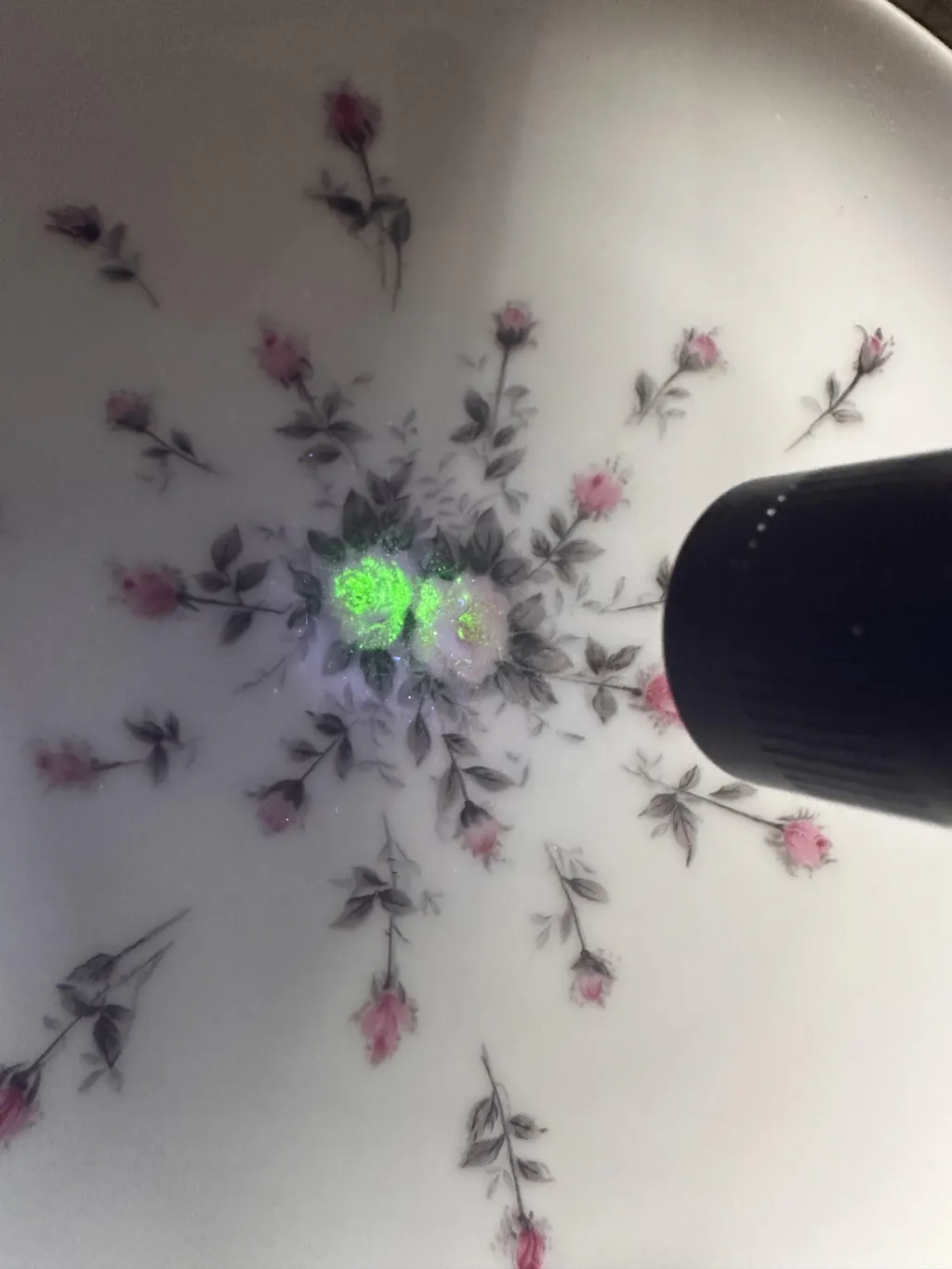
  4. Check under UV light. A bright fluorescent glow at the drop site means lead is present. No glow means the surface is clean.
  5. Wipe and document. Note the result and set positives aside.

If a piece tests positive: keep it out of reach of small children, do not allow chewing or sucking on it, and wash hands after handling. For pieces that go on bare skin daily, consider replacing them.

Test your jewelry.

The Detect Lead Full Kit includes FluoroSpec reagent, a UV lamp, and everything you need to clear out the costume jewelry drawer in an afternoon.

Get the Full Kit →