Lead Database

Small vintage milk glass Pyrex mixing bowl: 893 ppm lead by XRF
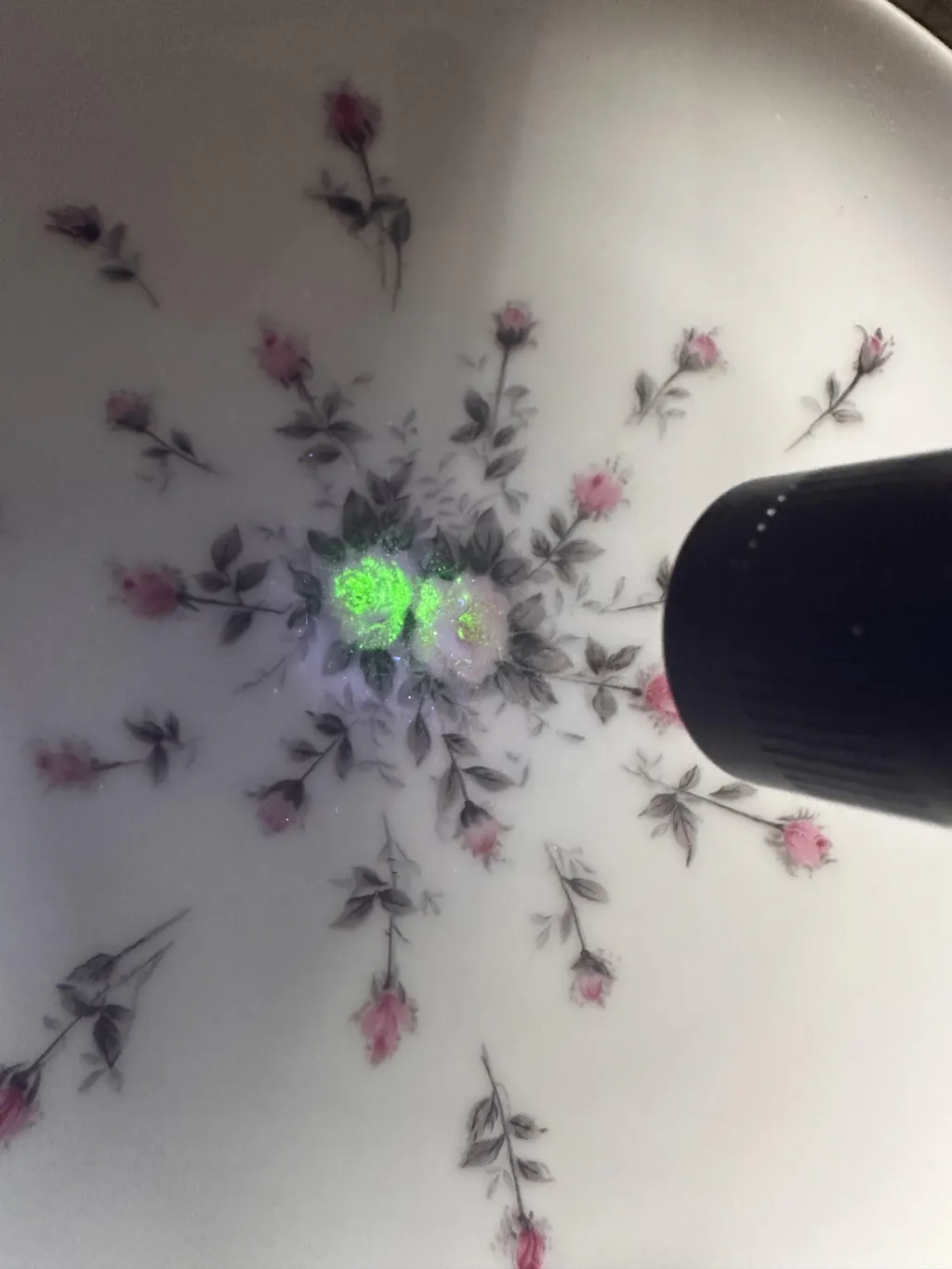
XRF readings: Lead: 893 ppm · Cadmium: not measured · Arsenic: not measured Verdict: Low-elevated, below most adult thresholds 893 ppm lead, above the 90 ppm CPSC children's item threshold but below levels that cause obvious alarm for adult use. For a children's item this is already over the regulatory limit. Vintage items commonly have elevated surface lead from historical glazing, this is expected context, not exceptional alarm. FluoroSpec gives the definitive surface answer: glow = reactive lead present, no glow = not in accessible form. There is no safe... Read more...
Pottery Barn Studio dish by Barbara Eigen: 230 ppm lead by XRF
XRF readings: Lead: 230 ppm · Cadmium: not measured · Arsenic: not measured Verdict: Low-elevated, below most adult thresholds 230 ppm lead, above the 90 ppm CPSC children's item threshold but well below levels that cause obvious alarm for adult use. For a children's item this is already over the regulatory limit. Independent leach testing on fired ceramics in this range found no detectable lead migration, the lead is chemically bound in the glaze matrix. FluoroSpec gives the definitive surface answer: glow = reactive lead present, no glow = not... Read more...
1990 Tom & Jerry Welch’s Jelly jar (Jerry on a white kite): 123,500 ppm lead by XRF
XRF readings: Lead: 123,500 ppm · Cadmium: 4,400 ppm · Arsenic: not measured Verdict: Extreme, do not use + High cadmium 123,500 ppm lead, roughly 12x the CPSC 90 ppm children's limit. At this concentration, even fired ceramic glaze carries leaching risk under acidic food conditions. No food contact under any circumstances. FluoroSpec will glow. NOTE: 4,400 ppm cadmium also detected, a separate and serious concern for colored glazes. There is no safe amount of lead. This number is a starting point, not a verdict on your safety. What matters... Read more...
1988/89 (?) Pterodactyl Welch’s Jelly jar (purple & white): 103,600 ppm lead by XRF
XRF readings: Lead: 103,600 ppm · Cadmium: 3,300 ppm · Arsenic: not measured Verdict: Extreme, do not use + High cadmium 103,600 ppm lead, roughly 10x the CPSC 90 ppm children's limit. At this concentration, even fired ceramic glaze carries leaching risk under acidic food conditions. No food contact under any circumstances. FluoroSpec will glow. NOTE: 3,300 ppm cadmium also detected, a separate and serious concern for colored glazes. There is no safe amount of lead. This number is a starting point, not a verdict on your safety. What matters... Read more...
1988 (?) Tyrannosaurus Rex Welch’s Jelly jar (orange & white): 123,600 ppm lead by XRF
XRF readings: Lead: 123,600 ppm · Cadmium: 4,400 ppm · Arsenic: not measured Verdict: Extreme, do not use + High cadmium 123,600 ppm lead, roughly 12x the CPSC 90 ppm children's limit. At this concentration, even fired ceramic glaze carries leaching risk under acidic food conditions. No food contact under any circumstances. FluoroSpec will glow. NOTE: 4,400 ppm cadmium also detected, a separate and serious concern for colored glazes. There is no safe amount of lead. This number is a starting point, not a verdict on your safety. What matters... Read more...
The Nurse who owns PrimalLife sent me an email threatening legal action, in which she demonstrated a clear misunderstanding of math and science: 681 ppm lead by XRF
XRF readings: Lead: 681 ppm · Cadmium: 127 ppm · Arsenic: not measured Verdict: Low-elevated, below most adult thresholds 681 ppm lead, above the 90 ppm CPSC children's item threshold but below levels that cause obvious alarm for adult use. FluoroSpec gives the definitive surface answer: glow = reactive lead present, no glow = not in accessible form. Also: 127 ppm cadmium present. There is no safe amount of lead. This number is a starting point, not a verdict on your safety. What matters is whether the lead can actually... Read more...
Primal Life Dirty Mouth Toothpowder: Positive for 7,000 ppb Lead and 18,000 ppb Cadmium (Cadmium causes cancer and is considered toxic when ingested) at levels in the 100 ppb range & up
XRF readings: Lead: not measured · Cadmium: not measured · Arsenic: not measured Verdict: No readings No numeric XRF data found in this post, may be image-only. FluoroSpec test is the definitive check. There is no safe amount of lead. This number is a starting point, not a verdict on your safety. What matters is whether the lead can actually reach a person. Think of tacks: a box of them in a drawer is fine, the same tacks loose on the kitchen floor are not. Lead locked in a stable... Read more...
XRF test results for vintage (1970s?) Fisher Price stacker toy… with ALL the bite marks! 4,289 ppm Lead, 517 ppm Arsenic & 18 ppm Cadmium
XRF readings: Lead: 4289 ppm · Cadmium: 18 ppm · Arsenic: 517 ppm Verdict: High: FluoroSpec test required This XRF test results for vintage (1970s?) Fisher Price stacker toy… with ALL the bite marks! 4,289 ppm Lead, 517 ppm Arsenic & 18 ppm Cadmium tested at 4289 ppm lead, significantly elevated. The bioavailability question (can this lead reach a person?) depends on whether the lead is locked into a fired matrix or sitting on a painted surface. Arsenic reads 517 ppm, worth noting on top of the lead question. What... Read more...
XRF test results for two de Buyer Pans, Made in France (sent in by a reader in Canada): 100 ppm lead by XRF
XRF readings: Lead: 100 ppm · Cadmium: 40 ppm · Arsenic: not measured Verdict: Low-elevated, below most adult thresholds 100 ppm lead, above the 90 ppm CPSC children's item threshold but well below levels that cause obvious alarm for adult use. FluoroSpec gives the definitive surface answer: glow = reactive lead present, no glow = not in accessible form. There is no safe amount of lead. This number is a starting point, not a verdict on your safety. What matters is whether the lead can actually reach a person. Think... Read more...
How to clean your new stainless steel pots BEFORE you use them for the first time: 2,500 ppm lead by XRF
XRF readings: Lead: 2,500 ppm · Cadmium: not measured · Arsenic: not measured Verdict: Elevated, likely lower risk in fired ceramic, test to confirm 2,500 ppm lead detected. Context: where on the item, food contact frequency, and whether it is fired ceramic vs. paint or soft coating matters significantly. Run FluoroSpec, glow = retire, no glow = likely lower risk. There is no safe amount of lead. This number is a starting point, not a verdict on your safety. What matters is whether the lead can actually reach a person.... Read more...
Are my kids’ crayons toxic? Which brand of crayons is safe? Crayola? Filana? Stockmar? Honey Sticks
XRF readings: Lead: not measured · Cadmium: 6 ppm · Arsenic: not measured Verdict: Lead-free per XRF No lead detected by XRF. FluoroSpec test will confirm no surface lead reactivity. There is no safe amount of lead. This number is a starting point, not a verdict on your safety. What matters is whether the lead can actually reach a person. Think of tacks: a box of them in a drawer is fine, the same tacks loose on the kitchen floor are not. Lead locked in a stable fired glaze is... Read more...
Noritake Progression China, Blue Haven pattern: 15,600 ppm lead by XRF
XRF readings: Lead: 15,600 ppm · Cadmium: not measured · Arsenic: 1,907 ppm Verdict: Very high, avoid food contact 15,600 ppm lead detected. While lead in fired ceramic glaze is generally tightly bound, at this concentration leaching into acidic foods (tomato, citrus, vinegar) becomes a realistic concern even in well-fired ware. FluoroSpec will confirm whether lead is surface-reactive. There is no safe amount of lead. This number is a starting point, not a verdict on your safety. What matters is whether the lead can actually reach a person. Think of... Read more...