Lead Database

Smiling Hill Farm Dairy (Maine) glass milk bottle by StanPac: Painted with green and black Lead paint (33,600 ppm Lead, 90 is unsafe): 33,600 ppm lead by XRF
XRF readings: Lead: 33,600 ppm · Cadmium: 900 ppm · Arsenic: not measured Verdict: Very high, avoid food contact 33,600 ppm lead detected. at this concentration leaching into acidic foods (tomato, citrus, vinegar) becomes a realistic concern even in well-fired ware. FluoroSpec will confirm whether lead is surface-reactive. Also: 900 ppm cadmium present. There is no safe amount of lead. This number is a starting point, not a verdict on your safety. What matters is whether the lead can actually reach a person. Think of tacks: a box of them... Read more...
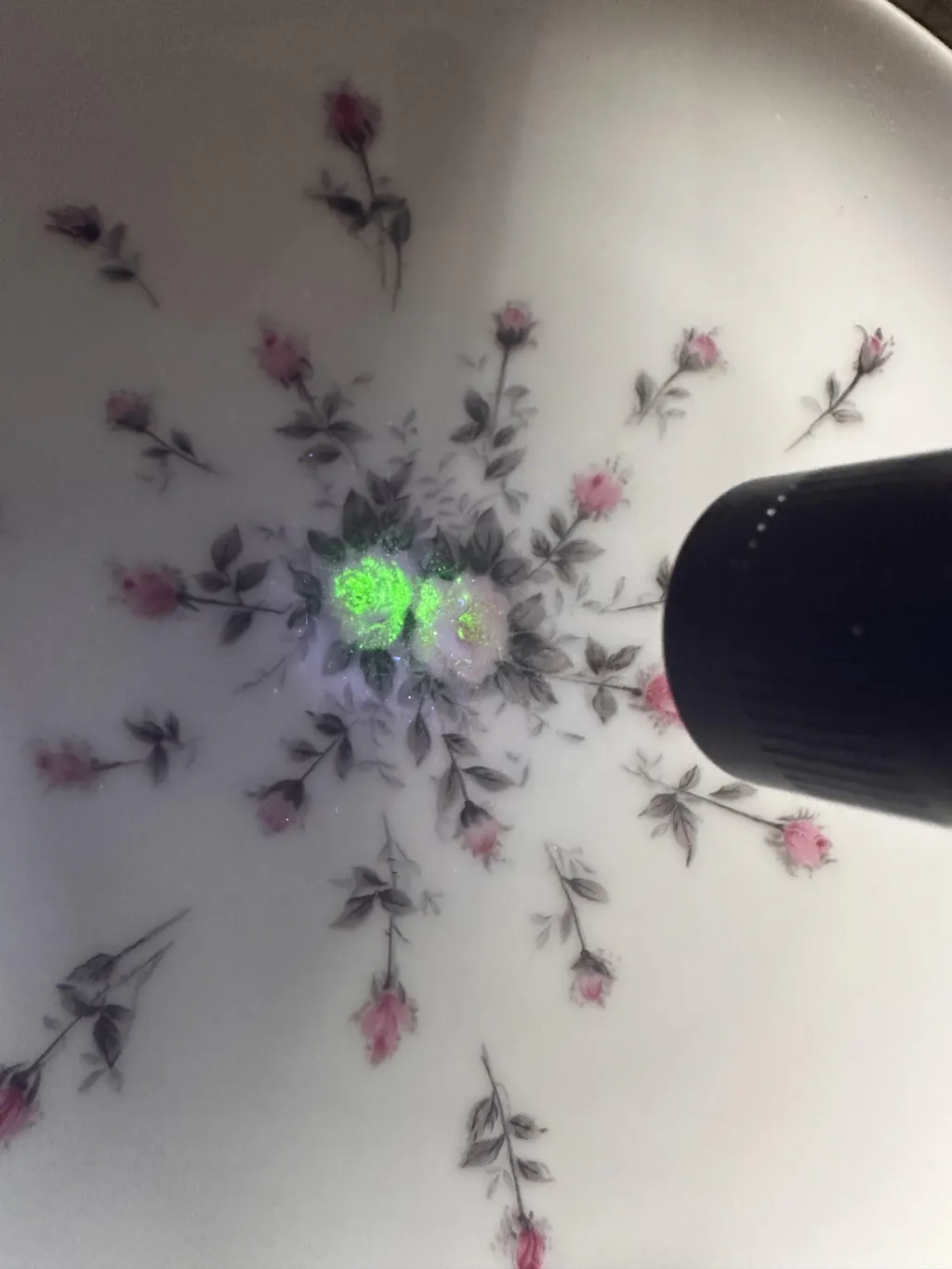
China brands associated with “quality” aren’t necessarily safe. 2001 Lenox Butterfly Meadow pattern china: 63,700 ppm lead by XRF
XRF readings: Lead: 63,700 ppm · Cadmium: 2,000 ppm · Arsenic: not measured Verdict: Extreme, do not use + High cadmium 63,700 ppm lead, roughly 6x the CPSC 90 ppm children's limit. At this concentration, even fired ceramic glaze carries leaching risk under acidic food conditions. No food contact under any circumstances. FluoroSpec will glow. NOTE: 2,000 ppm cadmium also detected, a separate and serious concern for colored glazes. There is no safe amount of lead. This number is a starting point, not a verdict on your safety. What matters... Read more...
Modern Handmade Japanese Ceramic Dishes Example #2: 11 ppm lead by XRF
XRF readings: Lead: 11 ppm · Cadmium: 5 ppm · Arsenic: not measured Verdict: Low, probably not a concern 11 ppm lead detected, below the 90 ppm children's safety threshold. At this level, most toxicologists would not flag this as actionable for typical adult use. FluoroSpec test: if it doesn't glow, the lead is not in reactive surface form. There is no safe amount of lead. This number is a starting point, not a verdict on your safety. What matters is whether the lead can actually reach a person. Think... Read more...
More wood-look tile results: Truewood, Navarro, Daltile positive for Lead between 10 ppm and 139 ppm: 139 ppm lead by XRF
XRF readings: Lead: 139 ppm · Cadmium: 7 ppm · Arsenic: not measured Verdict: Low-elevated, below most adult thresholds 139 ppm lead, above the 90 ppm CPSC children's item threshold but well below levels that cause obvious alarm for adult use. FluoroSpec gives the definitive surface answer: glow = reactive lead present, no glow = not in accessible form. There is no safe amount of lead. This number is a starting point, not a verdict on your safety. What matters is whether the lead can actually reach a person. Think... Read more...
A concern for Titanium Dioxide in paint on toys: Modern, painted wooden toys may be unsafe for infants and toddlers (even if they meet current safety guidelines): 1,015 ppm lead by XRF
XRF readings: Lead: 1,015 ppm · Cadmium: not measured · Arsenic: not measured Verdict: Elevated, keep away from children regardless 1,015 ppm lead detected. Context: where on the item, food contact frequency, and whether it is fired ceramic vs. paint or soft coating matters significantly. Run FluoroSpec, glow = retire, no glow = likely lower risk. There is no safe amount of lead. This number is a starting point, not a verdict on your safety. What matters is whether the lead can actually reach a person. Think of tacks: a... Read more...
Vintage, pressed glass small platter with 3 feet and swirl pattern: 333 ppm lead by XRF
XRF readings: Lead: 333 ppm · Cadmium: 16 ppm · Arsenic: not measured Verdict: Low-elevated, below most adult thresholds 333 ppm lead, above the 90 ppm CPSC children's item threshold but well below levels that cause obvious alarm for adult use. Vintage items commonly have elevated surface lead from historical glazing, this is expected context, not exceptional alarm. FluoroSpec gives the definitive surface answer: glow = reactive lead present, no glow = not in accessible form. There is no safe amount of lead. This number is a starting point, not... Read more...
How old are your child’s toys? Mega Bloks Large Yellow Building Block (c. 1990-2007?): 5,402 ppm lead by XRF
XRF readings: Lead: 5,402 ppm · Cadmium: not measured · Arsenic: not measured Verdict: High, FluoroSpec test required 5,402 ppm lead detected by XRF. This item is at or above the boundary where ceramic lead can begin to behave differently under acidic conditions. Children should not use this item. FluoroSpec is the actionable test: glow = retire it, no glow = lower risk. There is no safe amount of lead. This number is a starting point, not a verdict on your safety. What matters is whether the lead can actually... Read more...
Hallmark card “You Are What You Eat” turkey pin (plastic) tested positive for Cadmium and Mercury in the metal back
XRF readings: Lead: not measured · Cadmium: not measured · Arsenic: not measured Verdict: No readings No numeric XRF data found in this post, may be image-only. FluoroSpec test is the definitive check. There is no safe amount of lead. This number is a starting point, not a verdict on your safety. What matters is whether the lead can actually reach a person. Think of tacks: a box of them in a drawer is fine, the same tacks loose on the kitchen floor are not. Lead locked in a stable... Read more...
Noritake Envoy Platinum-edged China, Made in Japan: 2,509 ppm Lead in the back-mark/logo
XRF readings: Lead: 2509 ppm · Cadmium: 38 ppm · Arsenic: 0 ppm Verdict: Elevated: likely lower risk in fired ceramic, test to confirm This Noritake Envoy Platinum-edged China, Made in Japan: 2,509 ppm Lead in the back-mark/logo tested at 2509 ppm lead, significantly elevated. The bioavailability question (can this lead reach a person?) depends on whether the lead is locked into a fired matrix or sitting on a painted surface. What this XRF reading actually means → XRF measures lead presence on the surface. It does not measure whether... Read more...
Pillivuyt brand china piece (1 of 3) – white dish with looped handles [Design Sismo]: 9 ppm lead by XRF
XRF readings: Lead: 9 ppm · Cadmium: 8 ppm · Arsenic: not measured Verdict: Low, probably not a concern 9 ppm lead detected, below the 90 ppm children's safety threshold. At this level, most toxicologists would not flag this as actionable for typical adult use. FluoroSpec test: if it doesn't glow, the lead is not in reactive surface form. There is no safe amount of lead. This number is a starting point, not a verdict on your safety. What matters is whether the lead can actually reach a person. Think... Read more...
Pillivuyt brand china piece (3 of 3) – plate with ridged edges (Modele Depose): 32 ppm lead by XRF
XRF readings: Lead: 32 ppm · Cadmium: 6 ppm · Arsenic: not measured Verdict: Low, probably not a concern 32 ppm lead detected, below the 90 ppm children's safety threshold. At this level, most toxicologists would not flag this as actionable for typical adult use. FluoroSpec test: if it doesn't glow, the lead is not in reactive surface form. There is no safe amount of lead. This number is a starting point, not a verdict on your safety. What matters is whether the lead can actually reach a person. Think... Read more...
Pillivuyt brand china piece (2 of 3) – casserole with solid handles: 21 ppm lead by XRF
XRF readings: Lead: 21 ppm · Cadmium: 7 ppm · Arsenic: not measured Verdict: Low, probably not a concern 21 ppm lead detected, below the 90 ppm children's safety threshold. At this level, most toxicologists would not flag this as actionable for typical adult use. FluoroSpec test: if it doesn't glow, the lead is not in reactive surface form. There is no safe amount of lead. This number is a starting point, not a verdict on your safety. What matters is whether the lead can actually reach a person. Think... Read more...