the zipper that nobody helped
in 1985 an engineer had an idea that worked. the problem was he was completely alone with it.
May 2026

the Y-zipper, finally realized in 2026. photo: Tim Malieckal / MIT CSAIL
William Freeman was an electrical engineer at Polaroid in 1985 when he saw an ad in Scientific American. the Innovative Design Fund was offering up to $10,000 for clever prototypes in clothing and home goods. Freeman submitted a zipper that was triangular instead of flat. three strips instead of two, with a slider that funneled all three into a rigid tube when you zipped it up. unzip it and the whole thing went limp. it could pack flat, fold into a bag, ship in bulk.
they rejected it.
so Freeman patented it himself, put it in his garage, and waited. the patent ran its 20 years and expired. then it sat for another 20 years as prior art, free for anyone to pick up, and still nothing. four decades total. an idea that worked, just sitting there.
ideas don't pause when they're ignored, they disappear. like a neuron that never fires, the pathway stops being maintained and eventually the signal is just gone.
that's what happened here. Freeman wasn't sitting on it to block anyone. he tried to get it funded and got turned down. he did what he could to protect it legally. but he was one person. no manufacturing partner, nobody to help with the industrial design, no way to get it into production. the idea had no network around it, and a correct idea with nobody behind it just fades out.
what got lost
traditional zipper manufacturers have been injection molding complex tooth geometries at scale for decades. the Y-zipper teeth are not more intricate than what they were already making. a competent mold shop probably could have cracked the slider mechanism in the mid-1990s with the right tooling investment.
so consider what 40 years of silence actually cost. tent poles that zip into rigid triangular frames and pack flat into a sleeve. dry bags that go rigid on demand. deployable disaster shelters one person can assemble in under two minutes. orthopedic braces that zip and lock. satellite trusses that fold for launch and zip rigid in orbit. all of it either never existed, or got solved slower and heavier.
when MIT finally tested one in 2026, it survived 18,000 open-and-close cycles before failure. the thing was always going to work. it just needed someone to make it.
how it finally got made
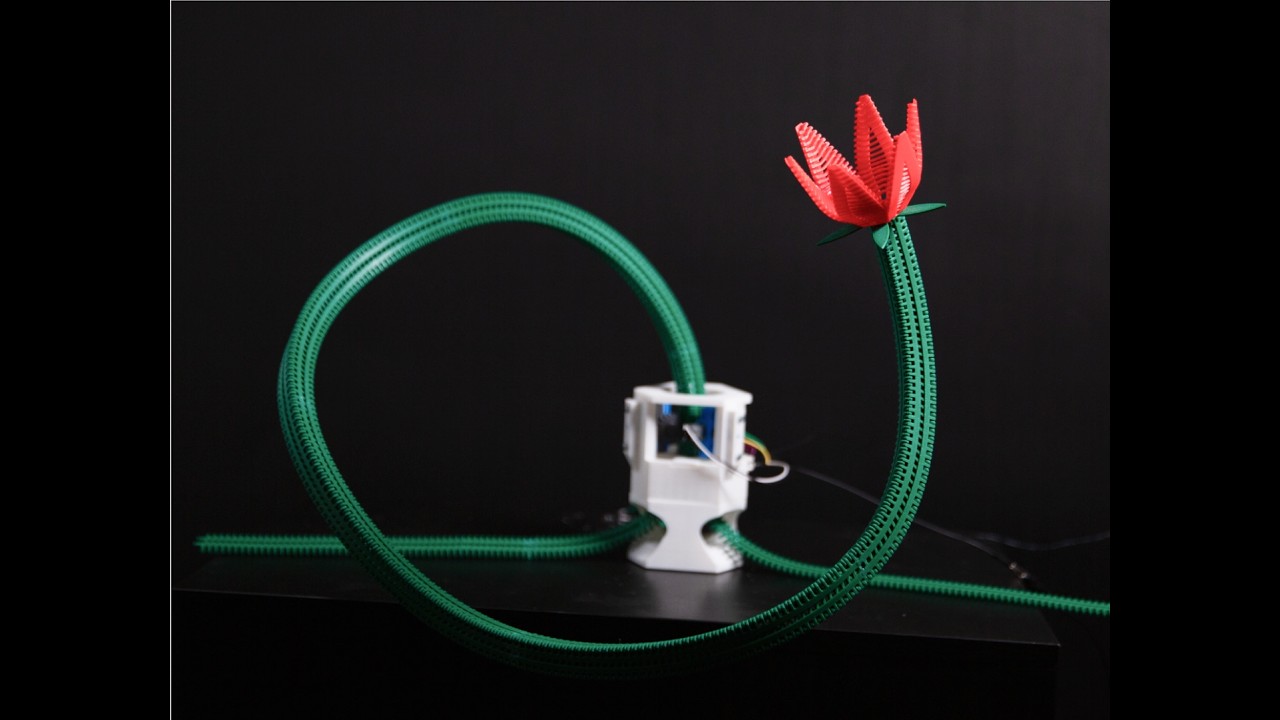
three strips, one slider, 40 years late. image: MIT CSAIL
in 2026, a postdoc at MIT's Computer Science and Artificial Intelligence Laboratory named Jiaji Li found Freeman's patent. he realized that modern consumer 3D printers finally had the dimensional tolerance to make the teeth mesh cleanly. Li built a design tool that takes any input curve and automatically generates all three zipper strips and the slider geometry. print them flat, peel them off the build plate, zip them together.
Freeman, now a professor at MIT, got to see his 1985 garage patent finally work. the paper was presented at CHI in April 2026. the design tool is open source, MIT licensed, free to use. tent assembly that used to take six minutes takes 80 seconds now.
this hits close to home
[fill in the DetectLead / FluoroSpec parallel here]
the invention was never the problem
Freeman wasn't selfish and he wasn't blocking competition. he got rejected, did what he could to protect his work, and ran out of road. nothing pointed his idea toward anyone who could have helped him build it, and that's the failure. one person alone with a correct idea is almost never enough.
ideas need oxygen. they need people willing to take the next step, or at least point you toward someone who can. the Y-zipper found those people eventually, forty years late, but it found them.